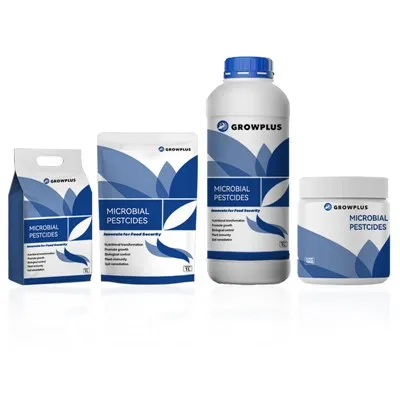
Trichoderma hamatum Active Ingredient is an industrial-grade microbial active substance engineered for agrochemical manufacturers and formulators. This biological technical material supplies high-density fungal spores that colonize plant root systems to suppress soil-borne fungal pathogens through mycoparasitism, enzyme secretion, and competitive exclusion. Designed for downstream formulation processing, it integrates cleanly into custom crop protection products, seed treatments, and soil amendment blends.
Biological Characteristics
Strain Identification
Fungal biocontrol strain classified under the genus Trichoderma.
Colony Morphology
Rapid-growing green-pigmented mycelial structures producing abundant microconidia.
Mechanism Profile
Filamentous beneficial fungus specialized in root zone colonization and cell wall degradation of target fungi.
Mode of Action
Mycoparasitism: Direct hyphal attachment, penetration, and enzymatic dissolution of target fungal cell walls using chitinases and beta-glucanases.
Competitive Exclusion: Rapid colonization of the rhizosphere, exhausting available space and nutrients to prevent pathogenic spore germination.
Antibiosis: Secretion of secondary metabolites that inhibit the metabolic activity of soil-borne pathogens.
Induced Systemic Resistance: Triggers plant defense pathways, boosting intrinsic resistance to foliar and root diseases.
Biological Targets and Applications
Pythium Species
Prevents root decay and seedling emergence failures in nursery soils.
Rhizoctonia solani
Controls stem rot, collar rot, and root lesion formation across broadleaf crops.
Fusarium Species
Suppresses vascular wilt infections in solanaceous crops and cucurbits.
Sclerotinia sclerotiorum
Inhibits white mold fungal sclerotia development in field environments.
Phytophthora Species
Reduces root rot pressure in irrigated field conditions.
Crop Protection Applications
Soil Drenches and In-Furrow Treatments: Applied directly to root zones during planting to establish early protective microbial barriers.
Seed Coatings and Dressings: Formulated into film-coating treatments to protect germinating seeds from soil-borne pathogens.
Foliar Blends: Mixed into specialized foliar formulations to manage surface microflora competition.
Growing Media Amendment: Blended into potting mix substrates for commercial greenhouse production.
Formulation Compatibility
Microbial Compatibility: Compatible with non-fungicidal biological actives, mycorrhizae, and beneficial rhizobacteria.
Carrier Compatibility: Stable in dry mineral carriers including talc, diatomaceous earth, kaolin clay, and silica.
Agrochemical Interactions: Incompatible with systemic synthetic fungicides, copper compounds, and strong oxidizing agents.
Co-Formulants: Compatible with non-ionic surfactants, dry wetting agents, and standard seed-coating polymers.
Technical Specifications
|
Parameter |
Specification |
Test Method |
|
Active Substance |
Trichoderma hamatum spores |
Microscopic Identification |
|
Standard Potency |
≥ 1 × 10¹⁰ CFU/g (≥ 2 × 10¹⁰ CFU/g available) |
Serial Dilution Plating |
|
Physical Form |
Fine dry powder |
Visual Inspection |
|
Color |
Off-white to pale green |
Visual Inspection |
|
Particle Size |
≥ 98% passing 200 mesh (75 μm) |
Sieve Analysis |
|
Moisture Content |
≤ 6.0% |
Loss on Drying (105°C) |
|
PH Range |
5.5–7.5 |
Potentiometric |
|
Non-Target Microorganisms |
Bacterial count < 10⁴ CFU/g; Yeasts/Molds < 10² CFU/g |
Selective Agar Media |
|
Heavy Metals as Pb |
≤ 10 ppm |
ICP-MS |
|
Arsenic Content |
≤ 2 ppm |
ICP-MS |
Quality Control Parameters
Every production batch undergoes DNA barcoding and microscopic verification to prevent strain drift.
Strict testing confirms absence of Salmonella, Escherichia coli, and human pathogens.
Spore germination rates verified via agar plating prior to packaging, ensuring active viability ≥ 90%.
Automated dry sieving ensures consistency for dust-free industrial handling.
Technical Documentation
Certificate of Analysis: Issued per batch, detailing CFU count, moisture, purity, and particle size distribution.
Safety Data Sheet: Available compliant with GHS, EU REACH, and US OSHA standards.
Manufacturing Flow Chart: Detailed industrial production process mapping for regulatory dossiers.
Stability Studies: Accelerated and real-time shelf-life testing data packages.
Storage and Stability
Cool Storage (4°C–8°C): Retains stated potency for 24 months in unopened original packaging.
Ambient Storage (20°C–25°C): Retains stated potency for 12 months stored in a cool, dry area away from direct sunlight.
Handling Precautions: Moisture-proof packaging must remain sealed until processing; avoid ambient humidity exposure above 65 percent.
Bulk Technical Supply
Production Capacity: Scalable fermentation output supporting commercial-volume supply requirements.
Manufacturing Standards: Standardized submerged and solid-state fermentation processes under cleanroom conditions.
Custom Concentrated Batches: High-potency active ingredient tailored to customer formulation requirements upon request.
Packaging Options
1 kg Aluminum Foil Bags: Vacuum-sealed, light-proof barrier bags packed 10 bags per outer carton.
25 kg Fiber Drums: Heavy-duty fiber drums with dual high-density polyethylene inner liners.
Custom Bulk Containers: Available upon request for large-scale industrial formulation processes.
Regulatory and Market Considerations
Taxonomic Characterization: Definitive genetic strain registration data available to support local registration filings.
Toxicological Profile: Non-pathogenic to mammals, birds, and aquatic organisms when used as directed.
Residue Exemptions: Suitable for organic crop production programs and zero-residue management systems.
FAQ
Q: What is the active potency standard of this Technical Grade Active Ingredient?
A: The standard commercial specification is ≥ 1 × 10¹⁰ CFU/g. Higher potency grades up to 2 × 10¹⁰ CFU/g can be supplied based on custom formulation needs.
Q: Can this active ingredient be blended directly with dry fertilizers?
A: Yes, it can be dry-blended with non-alkaline granular or dry powder fertilizers, provided storage conditions remain dry and temperatures stay below 30℃.
Q: How does this active ingredient perform in seed treatment formulations?
A: The fine particle size (≥ 98% through 200 mesh) allows uniform dispersion in liquid seed treatment matrices without clogging application nozzles.
Q: What parameters are checked in the batch Certificate of Analysis?
A: Each certificate verifies spore count, moisture content, particle size, pH value, and microbiological purity against target contamination thresholds.
Q: What is the recommended storage condition for long-distance ocean freight?
A: For international transport exceeding 30 days, reefer container transport (4°C–8°C) is recommended to preserve active spore viability.
Hot Tags: trichoderma hamatum active ingredient, China trichoderma hamatum active ingredient manufacturers, suppliers, factory