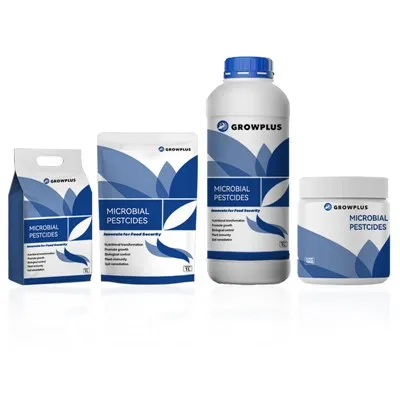
Purpureocillium lilacinum Active Ingredient is a targeted fungal technical material engineered for formulators and agrochemical manufacturers producing high-potency bionematicide treatments against plant-parasitic nematodes.
Biological Characteristics
Nematophagous entomopathogenic fungus targeting egg masses and juvenile stages.
Monoxenically cultivated strain profile with verified genetic sequencing.
Unicellular, ellipsoidal to fusiform phialospores suited for high soil persistence.
Mesophilic saprophytic growth targeting root-zone rhizosphere colonization.
Mode of Action
Egg Shell Enzymatic Degradation: Secretes serine proteases and chitinases to hydrolyze the protective outer shell of nematode eggs.
Juvenile Penetration: Conidial germ tubes penetrate the cuticle of sedentary juveniles, colonizing body cavities.
Rhizosphere Colonization: Establishes a physical barrier in the root zone to inhibit larval migration toward plant root tips.
Biological Targets and Applications
Root-Knot Nematodes (Meloidogyne species): Inactivation of egg clutches and infective second-stage juveniles.
Cyst Nematodes (Heterodera and Globodera species): Disruption of cyst viability and reduction of larval emergence.
Reniform and Lesion Nematodes (Rotylenchulus and Pratylenchus species): Suppression of root feeding sites and internal tissue damage.
Crop Protection Applications
Fruity Vegetables: Solanaceous crops including tomato, pepper, and eggplant under drip irrigation regimes.
Cucurbits: Cucumber, melon, and squash planted in nematode-infested soil profiles.
Perennial and Tree Crops: Citrus, banana, and vineyard rootstocks via soil drenching.
Field Crops: Potato, root tubers, and pulse crops via seed dressing or row-applied granules.
Technical Specifications
|
Parameter |
Specification |
Standard / Method |
|
Active Strain |
Purpureocillium lilacinum |
PCR / DNA Barcoding |
|
Spore Concentration |
≥ 1.0 x 10^10 CFU/g |
Plate Count / Hemocytometer |
|
Physical Appearance |
Fine off-white to light purple powder |
Visual |
|
Moisture Content |
≤ 8.0% |
Loss on Drying (105°C) |
|
Particle Size |
98% passing 200 mesh |
Dry Sieving Method |
|
PH Range (1% Suspension) |
5.5 - 7.5 |
Potentiometric |
|
Microbial Contamination |
Wild bacteria ≤ 1 x 10^3 CFU/g; Pathogens Absent |
ISO 21528 / ISO 6579 |
|
Suspension Stability |
≥ 80% |
CIPAC MT 184 |
Formulation Compatibility
Co-Formulants
Compatible with non-ionic surfactants, lignosulfonate dispersants, and dry carriers.
Tank-Mix Limits
Incompatible with systemic synthetic fungicides, chemical bactericides, and copper-based compounds.
Biological Blends
Stable when combined with mycorrhizal fungi, Bacillus biofertilizer strains, and humic acid carriers.
Quality Control Parameters
|
Genetic Purity Verification |
PCR strain-specific markers validated per production batch. |
|
Biological Activity Bioassay |
In-vitro nematode egg mortality testing with ≥ 85% mortality rate within 72 hours. |
|
Heavy Metal Tolerances |
Meets heavy metal residue limits (Lead ≤ 10 ppm, Arsenic ≤ 2 ppm). |
Technical Documentation
Certificate of Analysis per batch lot
Safety Data Sheet compliant with GHS regulations
Five-batch analytical assay report
Stability and shelf-life acceleration study reports
Storage & Stability
Cool Storage (4°C - 8°C): Stable for 18 months in unopened original packaging.
Ambient Storage (20°C - 25°C): Stable for 12 months in a dry, dark warehouse environment.
Handling Conditions: Keep sealed in low-humidity environments; minimize exposure to direct sunlight and heat sources.
Bulk Technical Supply
Production Capacity: Continuous solid-state and submerged fermentation capabilities to handle metric-ton volume requests.
Toll Manufacturing Support: Scalable batch quantities supplied tailored to technical-grade concentrate requirements.
Quality Assurance: Full lot traceability from master seed bank to packaged active ingredient.
Packaging Options
Standard Packaging: 1 kg aluminum foil bags, vacuum sealed.
Bulk Packaging: 25 kg fiber drums with inner dual-layer polyethylene liners.
Custom Shipping: Palletized shipments with temperature-controlled air or sea freight arrangements.
Regulatory & Market Considerations
Dossier Support: Complete technical characterization data available to support regional product registration filings.
Toxicology Profile: Low mammalian toxicity; non-toxic to non-target aquatic organisms and beneficial insects under applied dosage rates.
Organic Input Alignment: Produced via biological fermentation methods suited for input into certified organic farming systems.
FAQ
Q: What is the viable spore count of this technical material?
A: The standard technical specification delivers a minimum concentration of 1.0 x 10¹⁰ viable spores per gram (CFU/g), verifiable via serial dilution plate counts.
Q: Can this active ingredient be processed into liquid formulations?
A: Yes, the technical powder can be formulated into wettable powders, dispersible granules, or suspended in oil carriers using non-aqueous liquid processing.
Q: How does thermal exposure during transport affect product viability?
A: The active spores remain viable under ambient transport conditions for up to 14 days below 35°C. Cold-chain freight options are provided for long-distance international transit.
Q: Is technical registration support provided for regulatory submissions?
A: Full technical documentation, including strain identification data, toxicological summaries, and manufacturing process flow charts, is available for regulatory review.
Hot Tags: purpureocillium lilacinum active ingredient, China purpureocillium lilacinum active ingredient manufacturers, suppliers, factory