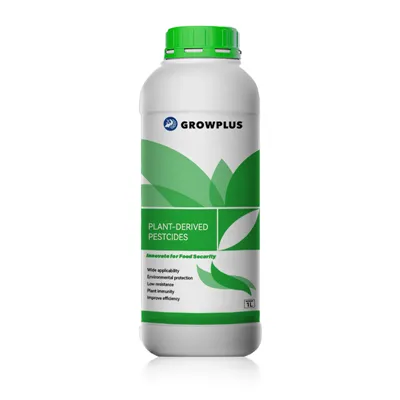
Trichoderma harzianum Nematicide is a biological soil inoculant containing viable fungal spores for the suppression of plant-parasitic nematodes. Formulated for integration into drip irrigation, soil drench, and seed coating protocols, this biological control agent colonizes the root zone, disrupts nematode reproduction cycles, and protects root systems in commercial vegetable, fruit, and field crop operations.
Active Microorganism
|
Active Strain |
Trichoderma harzianum (Selected high-efficiency nematicidal strain) |
|
Concentration Options |
2 × 10⁸ CFU/g, 1 × 10⁹ CFU/g, 2 × 10⁹ CFU/g (Customizable based on formulation requirements) |
|
Formulation Types |
Wettable Powder (WP), Water Dispersible Granule (WDG), Liquid Concentrate (LC) |
|
Moisture Content |
≤ 8.0% (Powder forms) |
|
Carrier Media |
Mineral-based carrier / Organic inert carrier |
Biological Mode of Action
Direct Parasitism and Egg Degradation: Fungal hyphae detect, coil around, and penetrate nematode eggs and second-stage juveniles. The strain secretes lytic enzymes including chitinases, proteases, and glucanases that degrade the structural integrity of nematode egg shells and cuticles.
Rhizosphere Colonization and Barrier Creation: The fungus establishes a protective physical barrier along root surfaces upon application, preventing active nematode larvae from penetrating root cells and forming feeding sites.
Secondary Metabolite Production: Bioactive secondary metabolites produced during fungal growth inhibit nematode motility, reduce egg hatching success, and paralyze active juveniles in the root zone.
Induced Systemic Resistance: Fungal establishment triggers defense pathways within host roots, elevating peroxidase and polyphenol oxidase enzyme activity to strengthen root tissue against parasitic entry.
Target Nematodes
Target Groups
- Root-Knot Nematodes
- Meloidogyne incognita
- Meloidogyne javanica
- Meloidogyne hapla
- Meloidogyne arenaria
Meloidogyne Species Control Focus
- Suppression of second-stage juveniles in soil
- Inhibition of egg sac development and hatching efficiency
Other Plant-Parasitic Nematodes
- Cyst Nematodes (Heterodera species, Globodera species)
- Lesion Nematodes (Pratylenchus species)
- Reniform Nematodes (Rotylenchulus reniformis)
- Root-Rot and Burrowing Nematodes (Radopholus similis)
Crops and Applications
Solanaceous Crops (Tomatoes, Peppers, Eggplants): Applied via drip irrigation during transplanting to secure root zone establishment before nematode infestation cycles begin.
Cucurbits (Cucumbers, Melons, Watermelons): Administered through fertigation systems to protect fragile taproots during early vegetative growth.
Root and Tuber Crops (Potatoes, Carrots): Integrated into soil pre-planting drenches or in-furrow applications to maintain crop appearance and root integrity.
Fruit Trees and Vineyards (Grapes, Citrus, Berries): Delivered through seasonal root zone drenches to manage persistent nematode populations in perennial soil beds.
Protected Agriculture and Greenhouses: Used in soil or coconut coir substrates to maintain root health under continuous cropping cycles.
Product Specifications
|
Parameter |
Specification (Wettable Powder) |
Test Standard |
|
Appearance |
Green to off-white homogeneous powder |
Visual Inspection |
|
Active Colony Count |
≥ 2 × 10⁹ CFU/g |
Serial Dilution Plating |
|
Non-target Microorganisms |
Less than 0.1% |
Microbiological Assay |
|
Particle Size |
≥ 98% passing 325 mesh (44 μm) |
Wet Sieve Test |
|
PH Range (1% Suspension) |
5.5 - 7.5 |
Digital pH Meter |
|
Wetting Time |
≤ 60 seconds |
CIPAC MT 53.3 |
|
Suspension Stability |
≥ 80% |
CIPAC MT 184 |
|
Moisture Content |
≤ 8.0% |
Loss on Drying (105°C) |
|
Shelf Life |
12 months at 20°C–25°C storage |
Accelerated Storage Test |
Formulation and Packaging
Standard Packaging Options
1 kg aluminum foil bags
10 kg paper bags
25 kg fiber drums with inner polyethylene liners
Bulk Supply Options
Flexible Intermediate Bulk Containers (Super Sacks) configured for industrial blending and repacking operations.
Packaging Performance
Moisture-proof, light-shielding, multi-layer laminated materials prevent humidity penetration and maintain spore stability during transit and storage.
Storage Requirements
Store in cool, dry conditions below 25 degrees Celsius. Protect from direct sunlight, moisture exposure, and thermal spikes.
Technical Documentation
Batch-specific documentation verifying colony counts, purity, particle size distribution, and physical stability parameters.
Fully compliant OSHA and GHS hazard and handling reference documentation.
Technical guidelines covering tank-mixing parameters with soil fertilizers, organic amendments, and non-fungicidal crop inputs.
Internal quality verification including strain identity confirmation via PCR assay and batch spore viable testing.
Supply Capabilities
Production Operations: Industrial submerged and solid-state fermentation infrastructure scaled for high-volume commercial order execution.
Customization Options: Custom spore concentrations, adjusted mesh sizes, and alternative carrier matrices tailored to specific regional formulation requirements.
Private Label Services: Toll manufacturing, custom blending, and OEM packaging under strict operational confidentiality agreements.
Batch Traceability: Complete tracking systems covering processing from master seed bank propagation through fermentation, drying, packaging, and dispatch.
FAQ
Q: What soil temperature range supports optimal activity for Trichoderma harzianum?
A: Spore germination and root colonization begin when soil temperatures reach 12 to 15 degrees Celsius. Peak biological performance occurs between 20 and 30 degrees Celsius.
Q: Can this product be tank-mixed with chemical fungicides?
A: Tank-mixing with synthetic copper-based or broad-spectrum chemical fungicides is not recommended. Maintain an application window of 7 to 10 days between chemical fungicide treatments and biological applications.
Q: How is spore viable count maintained throughout product shelf life?
A: Low-temperature drying processes combined with protective carriers maintain spore dormancy. Multi-layer moisture barrier packaging prevents exposure to ambient humidity, maintaining declared colony counts for 12 months under cooler storage parameters.
Q: When is the optimal application window for controlling root-knot nematodes?
A: Apply prior to planting, during seeding, or immediately after transplanting. Early application allows fungal hyphae to colonize the developing root system prior to nematode egg hatch and juvenile migration.
Hot Tags: trichoderma harzianum nematicide, China trichoderma harzianum nematicide manufacturers, suppliers, factory, Bacillus thuringiensis var. kurstaki Insecticide