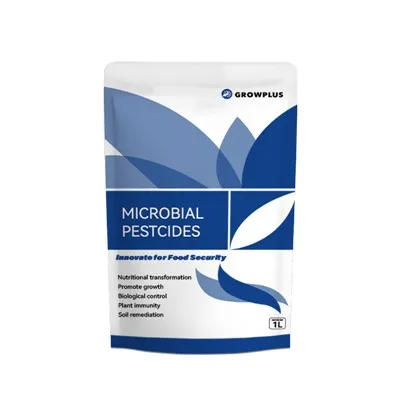
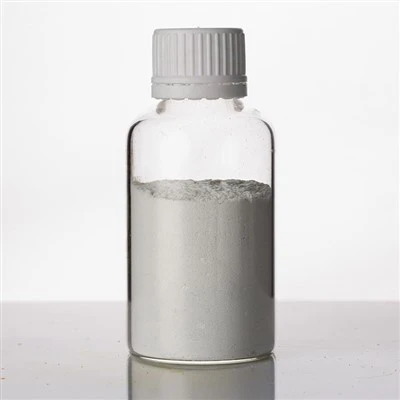
Pseudomonas fluorescens Bactericide is a biological plant protection formulation engineered for commercial soil-borne bacterial pathogen control, root system colonization, and plant systemic defense induction. Containing high-potency, viable strains of Pseudomonas fluorescens, this microbial bactericide suppresses root-rot and vascular pathogens through metabolite secretion, iron chelation, and competitive exclusion while concurrently mitigating root damage caused by parasitic nematodes. Supplied in wettable powder and liquid concentration formats, it is formulated for seamless integration into commercial drip irrigation, soil drenching, and seed treatment workflows without clogging application equipment.
Active Microorganism
Active Organism: Pseudomonas fluorescens
Biological Nature: Gram-negative, rod-shaped beneficial rhizobacterium
Standard Potency: 2 Billion CFU/g (Wettable Powder) | 1 Billion CFU/mL (Liquid Concentrate)
Purity Standard: Zero synthetic pesticide residues; bacterial purity at or above 99.5 percent with no pathogenic contaminants such as Salmonella or Escherichia coli
Production Method: Submerged liquid fermentation under strict sterile controls, optimized for secondary metabolite yield and cell stability
Biological Mode of Action
Secondary Metabolite Antibiosis: Produces bioactive compounds including 2,4-diacetylphloroglucinol, phenazine derivatives, and pyrrolnitrin that disrupt pathogenic bacterial cell walls and inhibit fungal spore germination.
Siderophore-Mediated Iron Chelation: Secretes high-affinity iron-binding siderophores named pyoverdine that sequester ferric iron in the rhizosphere, depriving soil-borne plant pathogens of essential micronutrients.
Induced Systemic Resistance: Triggers host plant endogenous defense pathways, prompting the accumulation of phytoalexins and defense-related proteins to build systemic defense against vascular wilt and soft rot.
Rhizosphere Competitive Exclusion: Rapidly colonizes the root zone, forming a biological barrier that blocks pathogenic entry points and outcompetes opportunists for root exudates and physical space.
Target Pathogens and Nematodes
Bacterial and Fungal Pathogens
Ralstonia solanacearum: Bacterial Wilt
Pectobacterium carotovorum: Bacterial Soft Rot
Xanthomonas species: Bacterial Spot and Blight
Pseudomonas syringae: Bacterial Canker and Leaf Spot
Rhizoctonia solani and Fusarium species: Root Rot and Damping-off Complexes
Target Nematodes
Root-Knot Nematodes: Direct egg envelope degradation and juvenile mortality against Meloidogyne incognita, Meloidogyne javanica, and Meloidogyne hapla.
Meloidogyne species: Suppression of gall formation and egg mass production on primary and lateral roots.
Other Plant-Parasitic Nematodes: Cyst nematodes, lesion nematodes, and burrowing nematodes.
Crops and Applications
Solanaceous Crops (Tomatoes, Peppers, Eggplants): Applied via drip irrigation at seedling transplanting to prevent bacterial wilt and suppress root-knot nematodes during early vegetative stages.
Cucurbits (Cucumbers, Melons, Squash): Administered through soil drenching to control root-rot complexes and enhance root biomass development under high moisture conditions.
Leafy Vegetables and Brassicas (Lettuce, Cabbage): Used in field fertigation to limit bacterial soft rot expansion ahead of canopy closure.
Tuber and Bulb Crops (Potatoes, Onions, Garlic): Integrated into seed piece treatments or in-furrow sprays at planting to suppress soil-borne skin defects and soft rot vectors.
Fruit Trees and Vineyards: Applied around the dripline in spring to establish protective root zones against bacterial gall disease and lesion nematode populations.
Greenhouse and Hydroponic Systems: Recirculated at low dosages to maintain biological control in closed substrate systems without altering electrical conductivity or pH balance.
Product Specifications
|
Parameter |
Specification (Wettable Powder) |
Specification (Liquid Concentrate) |
|
Appearance |
Light tan or off-white fine powder |
Amber or light brown liquid |
|
Viable Cell Count |
At or above 2 Billion CFU/g |
At or above 1 Billion CFU/mL |
|
Particle Size / Fineness |
98 percent passes through 325 mesh (44 microns) |
Not Applicable |
|
Water Solubility / Suspension |
Suspension rate at or above 90 percent |
100 percent miscible in water |
|
PH Range (1% Solution) |
6.0 to 7.5 |
5.5 to 7.0 |
|
Moisture Content |
At or below 8.0 percent |
Not Applicable |
|
Carrier / Base Material |
Food-grade inert carrier and dispersant |
Water-based nutrient broth with stabilizer |
|
Shelf Life |
12 months at 20 to 25 degrees Celsius |
6 months at 20 to 25 degrees Celsius |
|
Storage Temperature |
Cool, dry location (4 to 25 degrees Celsius) |
Cool location (4 to 20 degrees Celsius) |
|
Contaminant Limits |
Lead at or below 10 ppm; Arsenic at or below 5 ppm |
Lead at or below 10 ppm; Arsenic at or below 5 ppm |
Formulation and Packaging
Wettable Powder: Fine dry powder featuring immediate wetting and long suspension stability; designed for bulk tank mixing and drip systems.
Suspension Concentrate / Liquid: Aqueous formulation optimized for automated dosing, seed coating machinery, and hydroponic injectors.
Commercial Bulk Packaging: 1 kg aluminum foil bags (20 bags per carton), 5 kg re-sealable pouches, or 25 kg fiber drums with inner polyethylene liners.
Liquid Packaging Options: 1 L fluorinated high-density polyethylene bottles, 10 L jerrycans, or 1000 L intermediate bulk containers.
Custom Packaging Services: Custom concentration adjustments, specialized unit packaging sizes, and private labeling available for global commercial partners.
Technical Documentation
Certificate of Analysis: Provided for every production batch detailing verified CFU counts, physical property tests, and contaminant screening.
Material Safety Data Sheet: Fully compliant with global chemical safety standards and occupational requirements.
Compatibility Guide: Tank-mix matrix data detailing safe combination parameters with fertilizing salts, organic additives, and selective crop inputs.
Batch Traceability Report: Fermentation logs, quality testing records, and sample retention tracking indexed per lot number.
Commercial Supply
|
Minimum Order Quantity |
500 kg for powder formulation | 1,000 L for liquid formulation. |
|
Production and Fermentation Capacity |
50 Metric Tons monthly output supported by automated industrial bioreactors. |
|
Lead Time |
10 to 15 business days from order confirmation and document approval to port delivery. |
|
Shipping and Logistics |
Sea freight in temperature-controlled or ambient containers; air freight options for samples or urgent commercial trials. |
|
Quality Assurance Protocol |
Every lot undergoes a mandatory 5-day incubation test post-packaging to confirm viable CFU levels prior to container loading. |
FAQ
Q: Can Pseudomonas fluorescens Bactericide be mixed with chemical copper products?
A: Direct tank mixing with copper compounds or inorganic bactericides reduces bacterial viability. When copper products are applied, schedule the biological application 5 to 7 days afterward.
Q: What storage conditions are required to maintain the CFU concentration?
A: Keep the product stored in its original sealed packaging in a dry, cool area away from direct sunlight. Storage below 20 degrees Celsius preserves maximum CFU counts over extended periods. Avoid exposing containers to temperatures above 35 degrees Celsius during transit or storage.
Q: How does this product perform in high-salinity or variable pH soils?
A: The bacterial strains remain active across a soil pH range of 5.5 to 8.2. In higher salinity soils, applying the formulation via targeted drip irrigation alongside organic soil conditioners maintains localized root zone colonization.
Q: What is the recommended application timing for root-knot nematode control?
A: Apply at or immediately before transplanting or seeding to allow Pseudomonas fluorescens to establish on the root system prior to nematode attack. Re-application every 14 to 21 days maintains protective microbial density throughout critical root growth phases.
Q: Is pre-shipment sample testing available before commercial shipment?
A: Representative samples from designated batch lots are provided along with factory certificates of analysis prior to dispatching full commercial shipments.
Hot Tags: pseudomonas fluorescens bactericide, China pseudomonas fluorescens bactericide manufacturers, suppliers, factory, Entomopathogenic Microbial Product