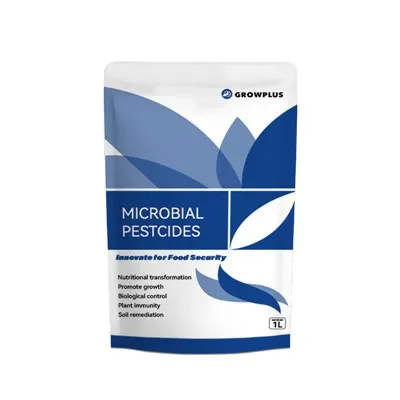
High-Titer Microbial Nematicides for Biological Plant-Parasitic Nematode Control
Microbial nematicides utilize specific beneficial bacteria and entomopathogenic or endophytic fungi to suppress plant-parasitic nematodes in agriculture. These biological solutions control plant-destructive nematodes through multiple modes of action, including egg parasitism, cuticle degradation via hydrolytic enzymes, juvenile paralysis, and root space colonization.
Formulated as wettable powders, water dispersible granules, soluble concentrates, and dustable granules, these active biological agents integrate seamlessly into conventional drip irrigation, in-furrow applications, and seed treatments without phytotoxicity or chemical residue build-up.
-
![Nematophagous Fungal Nematicide]() Nematophagous Fungal Nematicide
Nematophagous Fungal NematicideNematophagous Fungal Nematicide is a biological soil treatment formulated with specialized endoparasitic and hyphomycete fungi targeting economically damaging plant-parasitic nematodes. It
-
![Trichoderma Harzianum Nematicide]() Trichoderma Harzianum Nematicide
Trichoderma Harzianum NematicideTrichoderma harzianum Nematicide is a biological soil inoculant containing viable fungal spores for the suppression of plant-parasitic nematodes. Formulated for integration into drip irrigation, soil
-
![Lecanicillium Lecanii Nematicide]() Lecanicillium Lecanii Nematicide
Lecanicillium Lecanii NematicideLecanicillium lecanii Nematicide is a biological nematicide based on concentrated conidiospores of the entomopathogenic fungus Lecanicillium lecanii. Formulated for commercial agriculture and
-
![Pochonia Chlamydosporia Nematicide]() Pochonia Chlamydosporia Nematicide
Pochonia Chlamydosporia NematicidePochonia chlamydosporia Nematicide is a biological soil treatment formulated with viable chlamydospores of the parasitic fungus Pochonia chlamydosporia, engineered to suppress plant-parasitic
-
![Purpureocillium Lilacinum Nematicide]() Purpureocillium Lilacinum Nematicide
Purpureocillium Lilacinum NematicidePurpureocillium lilacinum Nematicide is a biological soil-applied agent formulated with high-viability spores of Purpureocillium lilacinum to control plant-parasitic nematodes without leaving
-
![Metarhizium Anisopliae Nematicide]() Metarhizium Anisopliae Nematicide
Metarhizium Anisopliae NematicideMetarhizium anisopliae Nematicide is a broad-spectrum biological nematicide based on concentrated fungal conidia, specifically isolated to control destructive plant-parasitic nematodes in


Microbial Nematicides for Biological Nematode Control
Biological nematode suppression relies on viable microbial strains capable of colonizing the rhizosphere and directly attacking soil-borne plant-parasitic nematodes at critical lifecycle stages.
Direct Egg Parasitism and Lysis
Specialized fungal hyphae penetrate nematode egg shells, producing chitinases and proteases that destroy the structural integrity of eggs before hatching.
Juvenile Paralysis and Mortality
Bacterial metabolites, lipopeptides, and organic acids disrupt nematode cell membranes and nervous function, reducing second-stage juvenile motility and root invasion.
Rhizosphere Exclusion and Root Protection
Beneficial microbes form a protective biological barrier around the root system, preventing infective juveniles from detecting host root exudates.
Induced Systemic Resistance
Colonization triggers plant defense pathways, elevating peroxidase and polyphenol oxidase enzyme activity within host tissue to resist systemic nematode stress.
Microbial Nematicide Products
|
Product Name / Strain |
Active Concentration |
Available Formulations |
Key Application Methods |
|
Purpureocillium lilacinum Technical and Formulations |
10 Billion to 20 Billion CFU/g |
Wettable Powder (WP), Water Dispersible Granules (WDG), Soluble Concentrate (SL) |
Drip Irrigation, Soil Drench, Root Dip |
|
Bacillus firmus Concentrate |
50 Billion to 100 Billion CFU/g |
Wettable Powder (WP), Soluble Concentrate (SL), Granules (GR) |
In-Furrow, Granular Banding, Seed Treatment |
|
Trichoderma harzianum Nematode Grade |
5 Billion CFU/g |
Wettable Powder (WP), Water Dispersible Granules (WDG) |
Soil Application, Nursery Substrates |
|
Bacillus subtilis Root Protection Strain |
100 Billion CFU/g |
Wettable Powder (WP), Soluble Concentrate (SL) |
Fertigation, Foliar and Root Zone Drench |
Microorganisms Used in Microbial Nematicides

Purpureocillium lilacinum
- Mode of Action: Egg parasite and cuticle-degrading fungus. Parasitizes female nematodes and eggs, stopping population reproduction cycles.
- Target Lifecycle: Nematode eggs, gelatinous matrixes, sedentary females, and second-stage juveniles.
- Physical Standard: Spore powder with fine particle size passing 44 micron wet sieve tests.
Bacillus firmus
- Mode of Action: Spore-forming rhizobacterium producing nematicidal secondary metabolites during spore germination.
- Target Lifecycle: Infective second-stage juveniles and active soil populations.
- Stability: Thermal tolerance up to 80 degrees Celsius in dry powder form; extended shelf life in commercial packaging.
Trichoderma harzianum
- Mode of Action: Multi-functional biocontrol strain combining rhizosphere colonization, enzyme-mediated nematode egg degradation, and root system enhancement.
- Target Lifecycle: Soil-dwelling eggs and early-stage juveniles.
Target Pests
Microbial nematicides effectively reduce soil populations of primary yield-limiting plant-parasitic nematodes:
Root-Knot Nematodes: Meloidogyne incognita, Meloidogyne javanica, Meloidogyne hapla, Meloidogyne arenae
Cyst Nematodes: Heterodera glycines (Soybean Cyst), Globodera rostochiensis (Potato Cyst)
Root-Lesion Nematodes: Pratylenchus penetrans, Pratylenchus brachyurus
Reniform Nematodes: Rotylenchulus reniformis
Dagger Nematodes: Xiphinema species
Burrowing Nematodes: Radopholus similis


High-Value Horticultural Crops
- Solanaceous and Cucurbits: Tomato, Pepper, Eggplant, Cucumber, Melon, Squash. Applied via drip irrigation systems 3 to 7 days post-transplanting.
- Root and Tuber Crops: Potato, Carrot, Sweet Potato. Applied as in-furrow sprays or direct soil incorporation before planting.
- Perennial Fruits and Orchards: Citrus, Banana, Grapevine, Pome Fruit. Applied through seasonal fertigation cycles around root drip lines.
Open-Field and Protected Agriculture
- Greenhouse and Nursery Substrates: Mixed directly into growing media or applied via seedling drench to establish early protective microbial colonies.
- Broad-Acre Crops: Cotton, Soybean, Maize. Seed treatment formulations and dry granular soil treatments.
Microbial Nematicides in Integrated Pest Management
Integrating microbial nematicides into Integrated Pest Management systems lowers reliance on synthetic chemical nematicides while preventing resistance build-up.
Zero Pre-Harvest Interval and MRL Exemption: Allows application up to harvest without chemical residue risks or market trade barriers.
Soil Health Preservation: Non-toxic to non-target soil organisms, earthworms, mycorrhizal fungi, and beneficial predatory mites.
Chemical Rotation and Synergism: Rotates with chemical nematicides or non-fumigant chemistries to manage resistant nematode populations and reduce synthetic chemical dosage rates.
Compatibility with Fertilizers: Compatible with most humic acids, amino acid bio-stimulants, and non-bactericidal liquid NPK fertilizers during fertigation.
Supply and Technical Documentation

Technical Capabilities and Quality Standards
Strain Identification: Full 16S rRNA and ITS sequence verification for exact strain purity and genetic stability.
Quality Assurance Parameters: Microorganism CFU count verified per batch via plate counting; contamination control limits strictly enforced below 0.1 percent non-target microbes.
Physical Specifications: Moisture content below 8 percent for powders; particle size optimized for drip line mesh filters with over 99.5 percent passage through 325-mesh sieve.

Commercial Packaging and Storage
Packaging Options: 1 kg aluminum foil bags, 20 kg fiber drums, 25 kg craft paper bags with moisture-barrier PE liners, or customized OEM packaging.
Storage and Shelf Life: Stable for 12 to 24 months under cool, dry conditions below 20 degrees Celsius.

Technical Support Package
- Certificate of Analysis per production batch
- Material Safety Data Sheet compliant with Global Harmonized System
- Product Specification Sheet
- Efficacy Field Trial Reports and Application Protocols
- Technical Registration Data Package support available for qualified distributors
FAQ

Request Commercial Quotation and Technical Dossier
Looking for customized formulation packaging, technical strain data, or bulk supply pricing for your distribution market? Contact our agronomic technical team to receive batch Certificates of Analysis, application guidelines, and tailored commercial terms.
As one of the most professional microbial nematicides manufacturers and suppliers in China, we're featured by quality products and good service. Please rest assured to wholesale bulk microbial nematicides at competitive price from our factory. Also, quotation is available.