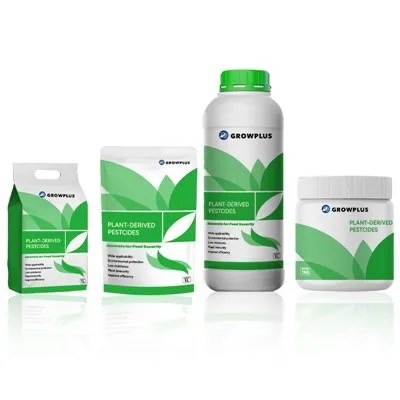
Lecanicillium lecanii Nematicide is a biological nematicide based on concentrated conidiospores of the entomopathogenic fungus Lecanicillium lecanii. Formulated for commercial agriculture and biological soil treatment, this microbial isolate penetrates nematode egg masses, infects second-stage juveniles, and suppresses root-knot nematode populations in soil profiles. It provides zero-residue protection against soil-borne plant-parasitic nematodes without disrupting beneficial rhizosphere microflora, serving as an effective component for Integrated Pest Management programs in high-value horticulture and open-field crop production.
Active Microorganism
Lecanicillium lecanii (formerly Verticillium lecanii)
Entomopathogenic / Nematophagous Fungus
Nematode eggs, egg masses, and second-stage infective juveniles
Non-pathogenic to non-target soil organism complexes when applied at recommended dosages
Biological Mode of Action
Spores Adhesion and Germination: Conidia attach to the cuticle of infective juveniles or the protective matrix of nematode egg masses upon contact in humid soil environments.
Enzymatic Degradation: Upon germination, the fungus secretes extracellular hydrolases-primarily chitinases, proteases, and lipases-that degrade the structural proteins and chitin layer of nematode egg shells and juvenile cuticles.
Hyphal Penetration & Colonization: Germ tubes invade the internal tissue of the host, proliferating as vegetative hyphae that extract nutrients from the target pest, leading to physical breakdown and host mortality within 48 to 72 hours.
Secondary Metabolite Excretion: Biosynthesis of secondary metabolites inhibits nematode locomotion, feeding activity, and egg hatching rates in the active root zone.
Target Nematodes
Root-Knot Nematodes
- Meloidogyne incognita (Southern root-knot nematode)
- Meloidogyne javanica (Javanese root-knot nematode)
- Meloidogyne arenaria (Peanut root-knot nematode)
- Meloidogyne hapla (Northern root-knot nematode)
Meloidogyne spp
Suppresses egg hatching and infective juvenile mobility across all major Meloidogyne species affecting greenhouse and open-field environments.
Other Plant-Parasitic Nematodes
- Pratylenchus spp. (Root-lesion nematodes)
- Heterodera spp. & Globodera spp. (Cyst nematodes)
- Radopholus similis (Burrowing nematodes)
- Rotylenchulus reniformis (Reniform nematodes)
Crops & Applications
Solanaceous Crops (Tomato, Pepper, Eggplant): Soil drenching or drip application prior to transplanting reduces gall formation on primary taproots.
Cucurbit Crops (Cucumber, Melon, Squash): Drip fertigation at early vegetative stages prevents root galling and preserves capillary root architecture.
Root & Tuber Crops (Potato, Carrot): Soil incorporation during land preparation or in-furrow spraying protects feeder roots during tuber initiation.
Berry Crops & Fruit Trees (Strawberry, Citrus, Grapevine): Root zone injection or fertigation in spring controls persistent lesion and root-knot populations.
Protected Agriculture & Greenhouses: Drenching growing media or substrate materials prevents nematode build-up under high-temperature cultivation cycles.
Product Specifications
|
Parameter |
Wettable Powder (WP) Standard |
Oil Dispersion / Liquid (OD/SC) Standard |
Test Method |
|
Active Ingredient |
Lecanicillium lecanii spores |
Lecanicillium lecanii spores |
Microscopic Counting / CFU Assay |
|
Potency / Concentration |
10 Billion CFU/g (Customizable) |
2 Billion CFU/ml (Customizable) |
Serial Dilution Plating |
|
Formulation Type |
Wettable Powder (WP) |
Oil Dispersion (OD) / Suspension Concentrate (SC) |
Visual Inspection |
|
Appearance |
Off-white to light tan dry powder |
Pale brown viscous liquid |
Visual Inspection |
|
Moisture Content |
6.0% or less |
Not Applicable |
Gravimetric Method |
|
pH Range (1% solution) |
5.5 to 7.5 |
5.0 to 7.0 |
pH Meter Assay |
|
Wetting Time |
60 seconds or less |
Not Applicable |
CIPAC MT 53.3 |
|
Suspension Rate |
80% or greater |
90% or greater |
CIPAC MT 184 |
|
Fineness (325 Mesh Sieve) |
98% or greater passing |
Not Applicable |
CIPAC MT 59.3 |
|
Spore Viability / Germination |
90% or greater at manufacture |
85% or greater at manufacture |
Germination Assay (24h at 25°C) |
|
Contamination Level |
Non-target microbes under 0.1% |
Non-target microbes under 0.1% |
Plating Culture Analysis |
Formulation & Packaging
Formulation Options: Wettable Powder, Water Dispersible Granule, and Oil Dispersion customized for standard spray nozzles and irrigation equipment.
Standard Industrial Packaging:
- Powders: 1 kg aluminum foil bags, 10 kg paper bags with inner PE liners, 25 kg fiber drums.
- Liquids: 1 L HDPE bottles, 5 L jerrycans, 20 L drums, 1000 L IBC totes.
- Packaging Protection: Moisture-proof, light-shielding multi-layer barrier bags with nitrogen flushing options for shelf-life enhancement.
- Custom Packaging: Private labeling, custom bag/bottle sizes, and custom outer carton configurations available for bulk buyers.
Technical Documentation
Certificate of Analysis: Issued per production batch verifying spore concentration, purity, and physical parameters.
Safety Data Sheet: Fully compliant with GHS, EU, and OSHA standards for international transit.
Technical Data Sheet: Comprehensive guidance on handling, mixing compatibility, storage parameters, and application techniques.
Efficacy Trial Reports: Laboratory assay records and field efficacy data documenting gall index reduction and yield response.
Certificate of Origin: Documentation for customs compliance and import regulatory procedures.
Commercial Supply
Production Capacity: Consistent large-scale submerged and solid-state fermentation capabilities ensuring batch-to-batch stability.
Quality Assurance: Strict quality control system covering raw material screening, fermentation parameters, spore harvesting, and final package sealing.
Storage & Stability: Stable for 12 months when stored in sealed original packaging at 4°C to 8°C; stable for 6 months at room temperature under 20°C.
Custom Processing: Formulations tailored to customer specifications including custom active counts, specialized carrier matrices, and customer-branded packaging.
Logistics & Shipping: Specialized cold-chain container options for long-distance ocean freight or express air freight delivery.
FAQ
Q: What is the recommended application rate and timing for soil-borne nematode control?
A: Apply at a rate of 1.5 to 3.0 kg/ha for Wettable Powder formulations or 2.0 to 4.0 L/ha for liquid formulations. Pre-plant soil application or early fertigation immediately after transplanting yields optimal results, targeting young root establishment before peak nematode infestation.
Q: How does temperature and soil moisture affect product efficacy?
A: Spore germination and hyphal growth occur between 15°C and 30°C, with optimum activity at 20°C to 28°C. Adequate soil moisture (field capacity between 60% and 80%) is required during application to facilitate spore dispersion and host contact.
Q: Can this product be mixed with chemical fungicides or fertilizers?
A: Avoid tank-mixing with broad-spectrum chemical fungicides, copper compounds, or strong alkaline inputs. Compatible with most biological inoculants, non-fungicidal bio-stimulants, and standard micro-nutrients. Maintain a minimum 7-day interval between fungicide applications and biological nematicide treatments.
Q: How does this strain differ from traditional chemical nematicides in residue management?
A: As a biological agent, it leaves no chemical residues on harvested crops, carries a zero-day Pre-Harvest Interval (PHI), and has no restricted entry intervals (REI) post-application, making it suitable for export-oriented agricultural production.
Q: What packaging and storage conditions maintain maximum spore viability during ocean shipment?
A: The product is vacuum-sealed or nitrogen-flushed in moisture-proof barrier packaging. For transit times exceeding 14 days, temperature-controlled reefer containers set at 4°C to 10°C are recommended to preserve conidial viability.
Q: What options are available for custom formulations or high-concentration bulk supply?
A: Bulk technical powders with concentrated spore counts up to 5 × 10¹⁰ CFU/g can be supplied for local reformulating. Custom additive packages designed for specific soil types, UV resistance, or enhanced suspension stability are provided upon request.
Hot Tags: lecanicillium lecanii nematicide, China lecanicillium lecanii nematicide manufacturers, suppliers, factory